




|
Quantity
|
Total
|
||
|
|
|||
Educational Toys for Fine Motor Skills Learn and Dream
Educational toys for fine motor skills by Learn and Dream are games and sets that help children train precise finger and hand movements, as well as hand-eye coordination. At first glance, these actions may seem simple: attaching a piece, threading a lace, matching a shape, completing a picture or opening a small element. However, they gradually prepare a child for important everyday skills: drawing, writing, buttoning clothes, using a spoon, scissors, pencils and other objects.
Why fine motor skills are important
Fine motor skills are closely connected with the development of speech, memory, attention and thinking. When a child actively works with their fingers, they not only train their hands but also learn to concentrate, analyze, remember sequences of actions and complete tasks.
Such games help children coordinate their movements better, develop perseverance and independence. For example, while lacing, a child learns to control the strength of movement; while playing with Velcro elements, they practice attaching pieces accurately; and while sorting, they compare objects by color, shape or size. All of this creates an important foundation for further learning.
What toys develop fine motor skills
The best toys for developing little fingers are those in which a child actively uses their hands: taking, pulling, inserting, connecting, opening, assembling or sorting. Among the most useful options are:
- lacing toys — train movement precision, coordination and prepare the child for tying shoelaces independently;
- sorters — help recognize shapes, colors and sizes while developing logical thinking;
- puzzles and inserts — build spatial thinking, attentiveness and understanding of the connection between a part and a whole;
- Velcro games — develop finger strength, coordination and allow the child to repeat the same action many times;
- memory games, lotto and themed cards — combine hand activity with the development of memory, speech and visual perception;
- mosaics and games with small age-appropriate elements — train accuracy, patience and creative thinking;
- sorting and counting sets — help develop motor skills, logic and early math skills at the same time.
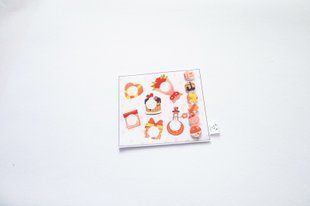
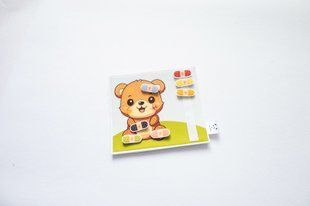
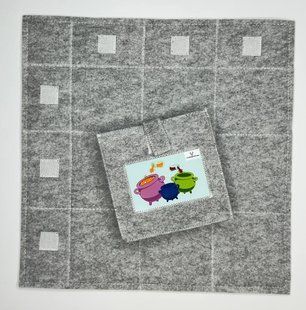
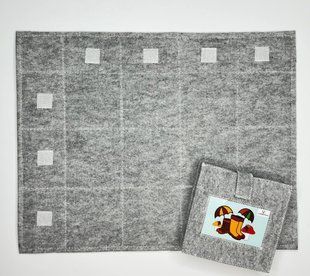
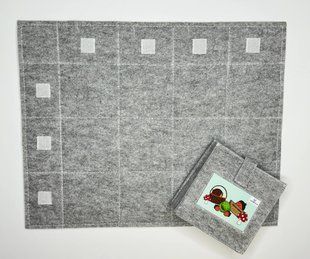
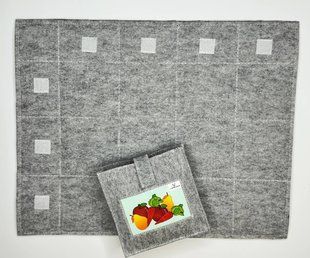
The Learn and Dream assortment includes educational games with soft pieces, Velcro elements, lacing activities, themed parts and tasks for children of different ages. Some games include felt details that are pleasant to touch, lightweight and comfortable for little hands.
Practical benefits for a child
Toys for fine motor development are useful not only for learning but also for everyday life. Through regular play, a child gradually learns to control their fingers better, hold a pencil more confidently, fasten clothes, open closures, use cutlery and perform simple everyday tasks without adult help.
In addition, such toys support speech development: during play, parents can name colors, objects, animals and actions, ask questions and encourage the child to explain their choice. For example: “What color is the apple?”, “Where should we attach the bunny?”, “What matches this shape?”. In this way, play turns into natural learning without pressure.
How to choose a toy for fine motor development
When choosing a toy, it is important to consider the child’s age, interests and developmental level. For younger children, it is better to choose games with large pieces, simple actions and bright, easy-to-understand pictures. For older preschoolers, more complex tasks are suitable: lacing with sequences, puzzles, lotto, memory games, sorting by several features, counting games, attention and logic activities.
It is good when a toy has several ways to play. For example, one set can be used for learning colors, developing speech, sorting, counting and role play. This helps keep the child interested for longer, while parents can gradually make the tasks more challenging.
Safety and quality
Educational toys for fine motor skills should be safe, durable and pleasant for a child to use. Pay attention to the quality of materials, the absence of strong smells, sharp edges and poorly attached parts. If a toy contains small elements, it should match the child’s age and be used under adult supervision.
High-quality Learn and Dream toys do more than simply keep a child busy — they help children develop naturally through touch, movement, repetition, communication and engaging tasks. That is why educational toys for fine motor skills are an important part of a child’s harmonious development at home, on the go or during shared activities with parents.