








|
Quantity
|
Total
|
||
|
|
|||
Educational toys for children aged 3–4
At the age of 3–4, a child becomes more independent, actively asks questions, remembers information better and can already complete simple tasks by following rules. That is why educational toys for children aged 3–4 should not only capture interest but also help develop thinking, speech, attention, memory and motor coordination.
At this age, play gradually becomes more intentional. A child no longer simply moves objects around, but compares them, finds pairs, groups items by color, shape or size, remembers the position of elements, counts, creates simple stories and learns to explain their actions.
What skills do these toys develop?
Educational games for children aged 3–4 help build important basic skills:
- logical thinking — through sorting tasks, matching activities, sequences and cause-and-effect connections;
- memory and attention — with memory games, lotto, educational cards, puzzles and observation tasks;
- fine motor skills — while using Velcro elements, lacing games, removable parts, mosaics and attachable pieces;
- speech development — when a child names objects, colors, animals, actions, professions, emotions and creates short phrases;
- spatial thinking — through puzzles, construction tasks, shape games and activities with object placement;
- social skills — during shared play with adults or other children, where the child learns to wait for their turn, communicate and follow rules.
What to choose for a child aged 3–4
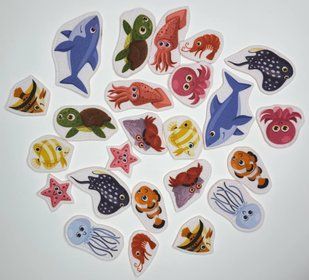
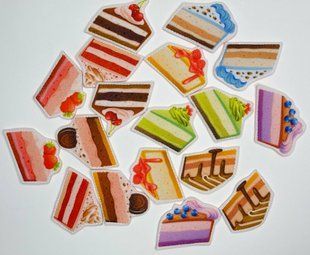
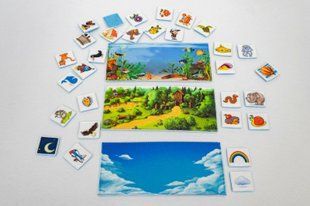
For this age, puzzles, sorters, lotto, memory games, observation games, reaction-speed tasks, lacing activities and themed sets for learning animals, transport, food, emotions, colors, numbers and shapes are a good choice. Games that combine several actions are also useful: finding, naming, counting, attaching, remembering or explaining.
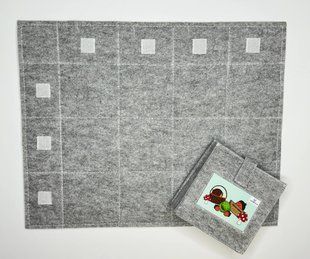
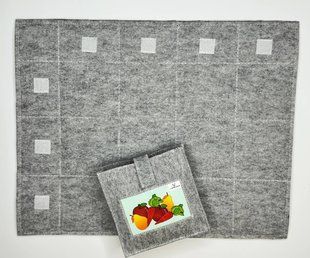
Soft elements made of felt and other pleasant-to-touch materials are comfortable for little hands, easy to use in learning activities and make play more engaging. Such toys can be used at home, on the go, in kindergarten or during shared activities with parents.
When choosing educational toys for children aged 3–4, pay attention to safe materials, quality of production, clear rules and age appropriateness. The best toy is the one a child returns to with interest and discovers a new way to play with each time.