





|
Quantity
|
Total
|
||
|
|
|||
Educational toys for children aged 2–3
At the age of 2–3, children actively explore the world through play: they touch, compare, sort, remember, repeat new words and learn to complete simple tasks. That is why educational toys for children aged 2–3 should be easy to understand, bright, safe and engaging for everyday use.
Our assortment includes learning games that help toddlers develop fine motor skills, logical thinking, memory, attention, speech and imagination. A child can match pairs, sort objects by color, shape or size, count elements, learn about animals, vegetables, fruits, transport, emotions and other familiar topics.
What skills do these toys develop?
Educational toys for this age help children gradually master essential skills:
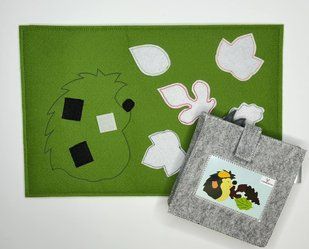
- fine motor skills — thanks to Velcro elements, lacing activities, removable parts, sorting and attaching pieces;
- logic and thinking — through tasks such as “find a pair”, “what doesn’t belong”, “sort by color”, “match the shape”;
- memory and attention — with memory games, lotto, simple puzzles and themed cards;
- speech development — by naming objects, colors, animals, actions and creating short stories;
- understanding the world — through familiar everyday objects, nature, food, professions and emotions.
These games are suitable both for independent play and for shared activities with parents. An adult can ask simple questions: “Where is the red one?”, “Who is this?”, “What does the bunny eat?”, “Which object is big?”. This helps not only reinforce knowledge but also develop speech and communication skills.
What to choose for a child aged 2–3
For toddlers of this age, toys with large pieces, simple rules and clear tasks are the best choice. These can include sorters, puzzles, lacing games, Velcro games, sets for learning colors, shapes, numbers, animals and everyday objects. Soft felt elements are pleasant to touch, lightweight and comfortable for little hands.
At the age of 2, children are interested in simple actions: attach, remove, put in place, find a matching item. At the age of 3, you can offer more challenging tasks: count, group, remember, create a story or follow an instruction.
When choosing educational toys for children aged 2–3, pay attention to safe materials, the absence of sharp edges and small dangerous parts. High-quality games made of felt and other soft materials help make learning easy, interesting and natural — through play, touch and live communication.