Advent Calendar for Children: 24 Learning Activities and Small Surprises
Short answer: prepare 24 envelopes, pockets, or folded cards, but do not feel obliged to fill each one with sweets or a present. Make short five-to-twenty-minute activities the main content: notice a winter sign, build a story, perform a kind act, play a memory game, or create a family ritual. An adult can arrange everything in advance or choose the next card each evening according to the family's plans, weather, and energy.
An advent calendar for children works best as a predictable moment together, not a daily test of good behaviour or a gift marathon. A child opens one note, understands a manageable action, and sees a clear end. On a difficult day, the activity can be shortened, replaced, or moved without “losing” the celebration.
The 24 tasks do not depend on a brand or purchased set. Print them, copy them, or replace words with pictures for a non-reader. Each family decides which dates and traditions to observe.
Choose the format by age
A toddler needs one visible action. A preschooler can follow two or three steps. A school-age child may read the note, prepare materials, and invent a family activity. Ages are guides, not tests.
|
Age or format |
Approximate time |
Suitable activity |
Adult's role |
Important limit |
|
Age 2–3 |
3–8 min |
find a picture, copy a movement, attach a large piece |
demonstrate one step and stay nearby |
no accessible small parts |
|
Age 4–6 |
7–15 min |
sorting, simple art, a story from three pictures |
explain briefly and preserve choice |
scissors, glue, cooking, and candles only with an adult |
|
Age 7–9 |
10–25 min |
a quest, letter, kind-act plan, family game |
help plan time and materials |
no independent task near traffic, flame, or hot surfaces |
|
Two different ages |
10–20 min |
one mission with two genuine roles |
give each child meaningful work |
do not compare speed or artistic result |
|
A very busy day |
2–5 min |
a hug by consent, one riddle, a song, window observation |
accept a short version without guilt |
the task never takes away needed sleep |
Advent does not require 24 perfect evenings. Include “light” notes: choose a book, name a pleasant moment, or find something round. Keep a quick alternative for tiredness or bad weather.
Assemble the calendar without unnecessary shopping
Use envelopes, small bags, fabric pockets, or folded cards in a box. Numbers show the sequence, but tasks need not follow dates strictly. Swap any weather-dependent envelope.
Never leave coins, magnets, button batteries, small beads, medicine, essential oils, or food with unchecked allergens within a young child's reach. A candle belongs only in a continuously supervised ritual; a paper star or a battery light with a secured compartment is a simpler alternative.
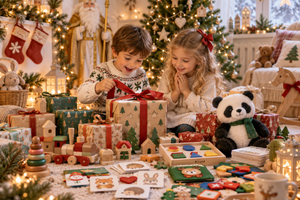
If you choose an advent calendar with toys, a small object can appear on selected days, but give it a purpose: a figure becomes a story character, cards form a memory game, and a sticker marks a kind act. The surprise then supports shared play rather than replacing it.
Days 1–6: anticipation and winter attention
Day 1. Create the calendar symbol
Draw a simple emblem for your advent—a star, mitten, tree, or family mark. The child chooses two colours and the adult adds the year. Attach it to the box or ribbon. The first task creates a beginning without buying separate decorations.
Day 2. Notice winter
On a short walk or from a window, find three seasonal signs: bare branches, early darkness, frost, snow, or warm clothing. Do not demand a stereotypical snowy winter if the weather is different. Record what is genuinely present and compare it one week later.
Day 3. Warm and cold
Sort safe pictures or household items into things associated with warmth and cold. Discuss function: a hat is not “warm by itself”; it helps the body retain heat. Do not use hot water or prolonged contact with ice to prove the idea.
Day 4. Three kind words
Each person offers three sincere words to someone else about an action, quality, or shared moment. Give a younger child a sentence start: “I like it when you…” Do not force praise on demand; drawing a sign or listening quietly is also participation.
Day 5. A trail of footprints
Cut large paper footprints together or draw them with chalk on a permitted surface. Make a short trail to a book or the next note. The adult handles scissors unless the child can use age-appropriate scissors under supervision. Keep the route away from stairs and a hot kitchen.
Day 6. Who left that track?
Look at three to five animal pictures and imagine each creature's track. Print fingertips in washable paint or draw paws. Compare shape and number of “toes” instead of expecting the child to identify a species without enough information.
Days 7–12: language, memory, and small investigations
Day 7. A story from three pictures
Choose a character, place, and event. Tell what the character wanted, what happened, and how it ended. If needed, the adult provides the first sentence. Avoid correcting every word during the story; first protect the sequence of thought.
Day 8. Four-pair memory
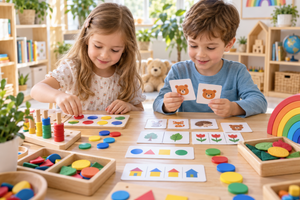
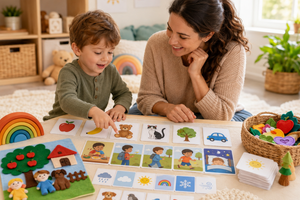
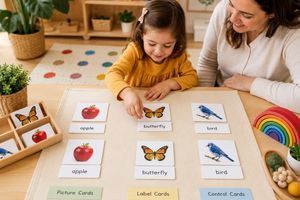
Use eight cards or draw four matching symbol pairs. Turn them face down and take turns. Leave pictures face up for a toddler; ask an older child to describe the pair. A ready option is the Christmas memory game.
Day 9. What changed?
Place four safe objects in view. The child looks, turns away, and the adult swaps two or removes one. A harder version changes an item's position. Do not add more objects until the rule itself is understood.
Day 10. Snowflake dance
Build a three-movement sequence: raise arms, turn, and slowly crouch. Repeat it, then let the child compose. Clear the floor, remove slippery rugs, and skip rapid spinning if anyone becomes dizzy.
Day 11. Supervised ice experiment
Put one ice cube in each of two bowls. Leave one on the table and one in a cooler place. Predict which melts first and check. Do not eat experimental ice, wipe water immediately, and avoid holding ice against bare skin.
Day 12. Family riddle
Describe an object without naming it: material, shape, purpose, and location. A preschooler needs only two clues. Avoid riddles about a present the child expects; the calendar should not imply promises the family has not made.
Days 13–18: creativity, care, and shared household tasks
Day 13. Paper chain
Make five to eight large paper links. The child chooses a colour pattern while the adult assists with scissors or staples. Keep loose staples away from young children. Use age-suitable glue and wash hands afterwards.
Day 14. Thank-you note
Choose someone to thank. The child dictates one specific sentence, draws, or signs the note. Do not publish a photo or address without permission. It may be delivered, kept at home, or simply read aloud.
Day 15. One helpful act
Choose a real five-to-ten-minute action: arrange books, water an approved plant, match clean socks, or place napkins for dinner. It must not replace dangerous adult work or become a condition for receiving a surprise.
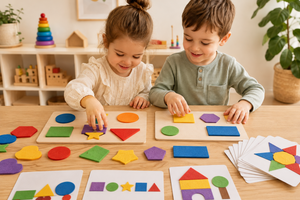
Day 16. Shape pattern
Use large circles, triangles, and squares to build a repeating sequence. Then let the child invent one. Do not give confetti-sized pieces to a toddler. Photograph the finished pattern if the child wants to reuse the parts.
Day 17. Family playlist
Each person chooses one winter or favourite song and explains why. Keep the volume comfortable. If music is stimulating before bedtime, dance earlier and reserve quiet listening for the evening.
Day 18. Care box
Fill a box with simple ways to support one another: bring water, offer a hug with consent, help restore a game, or listen to a story. Draw one note and carry it out. A child may decline touch and choose another caring action.
Days 19–24: finish with shared traditions
Day 19. Winter bingo at home
Draw six clues: something soft, white, shiny, round, warm, or fragrant. Find examples without moving fragile or forbidden items. Older children explain why each object fits its clue.
Day 20. Shadow theatre
Point a torch at a wall and make simple hand silhouettes. Never direct the beam into eyes, and keep the battery compartment secured. A younger child copies one form; an older one creates a scene with a beginning and end.
Day 21. Kitchen helper
The child completes a safe part of food preparation: washes fruit, mixes cool ingredients, counts napkins, or decorates cooled food. The adult controls knives, stove, oven, hot liquid, and allergen checks. Shared action matters more than a complex recipe.
Day 22. Gratitude walk
On a familiar, well-lit route, each person names three things appreciated today: warmth at home, a conversation, a tree, snow, or help. Do not enter a dark or icy place for the task. Window observation is a valid alternative.
Day 23. The child's choice of game
Offer two or three familiar games. The child chooses one and explains its rule. The guide How to Use Learning Cards: 25 Games provides easy card variations. Use a short version when everyone is tired.
Day 24. Memory capsule
Choose three favourite tasks, draw one moment, and record a wish for the family that is not a demand for a gift. Put the pages in a dated envelope and agree when to reopen it. Store no food, batteries, or damp objects inside.
Balance long and short activities
Avoid placing a craft, cooking, and an outing on three consecutive days. Alternate language, movement, observation, and care. The table offers quick replacements that preserve the rhythm without forcing the original plan.
|
Today's capacity |
Main option |
Two-to-five-minute substitute |
Prepare beforehand |
|
Ready for art |
paper chain or shape pattern |
draw one calendar symbol |
paper, age-safe glue, large shapes |
|
Need movement |
Snowflake Dance or Footprint Trail |
three movements beside a chair |
clear floor, movement card |
|
Need calm |
memory, riddle, thank-you note |
name one good event |
four card pairs or paper |
|
Good weather |
winter observation or gratitude walk |
watch through a window |
suitable clothes and a visible route |
|
Very little time |
Care Box |
choose one song or offer a hug by consent |
one note, no materials |
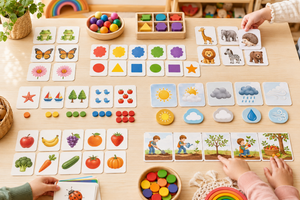
For seasonal images, browse the Holidays learning-card category or Winter Montessori three-part cards. They can support vocabulary, memory, and sorting, but there is no need to purchase 24 separate objects.
When selecting educational toys for winter family activities, check the stated age, contents, and part size. A small surprise is useful only when it is safe and has a clear way to be used.
Content is more important than “for boys” or “for girls”
Whether a box is marketed as an advent calendar for a boy or an advent calendar for a girl, choose the content by interests and current skills rather than colour. Any child may enjoy building, dancing, animals, stories, cooking, movement, or observing nature.
When a product is described as a children's advent calendar, check its contents, minimum age, piece size, and the realistic daily workload. A kids' advent calendar should support anticipation without creating 24 new obligations for parents.
Advent calendars for children can be reusable: fabric pockets or small boxes receive new notes each year. Ready-filled children's advent calendars also require checks for allergens, small parts, age limits, and repetitive contents. Format is never more important than safety and family rhythm.
For evening cards, use ideas from Quiet Screen-Free Games Before Bed. They help keep the ritual brief when an energetic task no longer suits the time of day.
Frequently asked questions
When should we start an advent calendar for kids?
Many families use the 24 days before a chosen celebration, but this is not compulsory. Make 12, seven, or even five notes if that works better. The adults should be able to maintain the rhythm without exhaustion, and the child should understand how many openings remain.
Does every envelope need a present?
No. Most days can contain a shared action, riddle, song choice, or small kind deed. Material surprises should not become payment for behaviour. If you add an object, check its age rating, parts, and intended use.
How can a non-reader use the calendar?
Draw simple symbols or use photographs: a boot for a walk, a book for a story, hands for Mirror. The adult reads one short note and demonstrates the first action. Do not put several abstract instructions in one envelope.
What if we miss a day?
Do not run two demanding tasks the next day. Save the missed card, replace it with a short one, or use it after the calendar ends. Advent calendars should support family life rather than create debt and disappointment.
How can sweets or tiny surprises be included safely?
Check allergens, expiry dates, age guidance, and choking risk. Batteries, magnets, coins, and tiny parts stay out of a young child's reach. Food should not be conditional on completing the activity; the adult decides when and how much to offer.
Conclusion
A good advent calendar for children is not a set of 24 expensive purchases. It is a sequence of small, complete moments. Alternate movement, creativity, observation, language, and care; include quick backup cards; and change the order when family life requires it. Anticipation then becomes a warm shared rhythm rather than another project adults must perform perfectly.